

 By
By In industries where safety and reliability are critical, every fastening component must meet the highest quality standards. Stainless steel stud bolts are widely used in piping systems, pressure vessels, heat exchangers, refineries, petrochemical plants, and offshore platforms because of their exceptional strength, corrosion resistance, and durability.
However, the performance of a stud bolt depends not only on the material but also on the manufacturing process behind it. From selecting the right stainless steel rod to final inspection and packaging, every stage plays a vital role in ensuring the finished product meets international standards.
In this blog, we’ll walk through the complete manufacturing process of stainless steel stud bolts and explain why quality control at every step matters.
What Are Stainless Steel Stud Bolts?
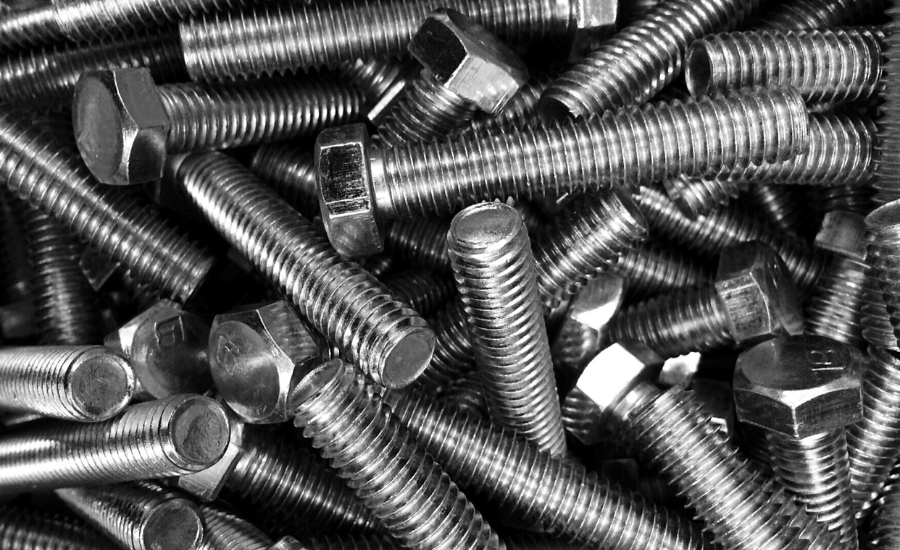
A stud bolt is a fully threaded fastener designed to be used with two heavy hex nuts. Unlike conventional bolts with a head, stud bolts provide superior load distribution and are commonly used in flange connections that require high clamping force.
They are extensively used in industries such as:
- Oil & Gas
- Petrochemicals
- Power Plants
- Chemical Processing
- Marine Engineering
- Water Treatment
- Construction
- Pharmaceutical Plants
Their excellent resistance to corrosion and ability to withstand high temperatures make stainless steel stud bolts ideal for demanding industrial applications.
Step 1: Selection of Premium Stainless Steel Rods
The manufacturing process begins with selecting high-quality stainless steel round bars or rods.
Common grades include:
- Stainless Steel 304
- Stainless Steel 304L
- Stainless Steel 316
- Stainless Steel 316L
- Duplex Stainless Steel
- Super Duplex Stainless Steel
The raw material is carefully verified for:
- Chemical composition
- Mechanical properties
- Surface quality
- Dimensional accuracy
Using certified raw materials ensures the finished stud bolts meet project specifications and international standards.
Step 2: Cutting the Rod to Required Length
After inspection, the stainless steel rods are cut into predetermined lengths according to customer specifications or standard sizes.
Modern CNC cutting machines ensure:
- Accurate dimensions
- Smooth cutting surfaces
- Minimal material wastage
- Consistent production quality
Precision at this stage helps maintain uniformity throughout the manufacturing process.
Step 3: Thread Rolling or Thread Cutting
The next step involves creating threads along the entire length of the stud bolt.
There are two commonly used methods:
Thread Rolling
Thread rolling is a cold-forming process where threads are formed by pressing the rod between hardened dies.
Advantages include:
- Higher tensile strength
- Better fatigue resistance
- Improved surface finish
- Longer service life
Thread Cutting
For larger sizes or specialized applications, precision thread cutting may be used to achieve exact thread profiles.
The chosen method depends on the bolt size, material grade, and customer requirements.
Step 4: Heat Treatment (Where Required)
Certain stainless steel and alloy grades require controlled heat treatment to improve their mechanical properties.
Heat treatment helps:
- Increase strength
- Improve toughness
- Reduce internal stresses
- Enhance durability
The process is performed under carefully monitored temperature conditions to maintain material integrity.
Step 5: Surface Finishing
Once threading is complete, the stud bolts undergo surface finishing to improve both appearance and corrosion resistance.
Depending on customer requirements, finishing options may include:
- Pickling
- Passivation
- Mechanical polishing
- Electro polishing (for specific applications)
These treatments remove contaminants and strengthen the protective chromium oxide layer that gives stainless steel its corrosion resistance.
Step 6: Dimensional Inspection
Every stud bolt is inspected to ensure compliance with dimensional specifications.
Quality inspectors verify:
- Overall length
- Thread length
- Thread pitch
- Diameter
- Straightness
- Surface condition
Advanced measuring instruments help maintain tight tolerances and ensure consistency across production batches.
Step 7: Mechanical & Material Testing
Before dispatch, stainless steel stud bolts undergo rigorous quality testing.
Typical inspections include:
- Tensile strength testing
- Hardness testing
- Positive Material Identification (PMI)
- Chemical analysis
- Dimensional verification
- Visual inspection
For critical industrial projects, additional Non-Destructive Testing (NDT) may also be performed based on customer requirements.
These tests ensure every stud bolt meets the required performance standards.
Step 8: Marking and Traceability
Traceability is an essential requirement in industries such as oil & gas and petrochemicals.
Each batch is marked with information such as:
- Material grade
- Size
- Heat number
- Manufacturer identification
- Batch number
This allows complete traceability throughout the product’s lifecycle.
Step 9: Packaging and Dispatch
Proper packaging prevents damage during transportation and storage.
Manufacturers typically use:
- Protective thread caps
- Moisture-resistant packaging
- Wooden boxes or export-grade cartons
- Clearly labeled packaging
Secure packaging ensures the stud bolts reach customers in excellent condition, ready for installation.
Why Quality Manufacturing Matters
Even a minor defect in a stud bolt can lead to flange leakage, equipment failure, or unplanned downtime. That’s why every stage of manufacturing—from raw material selection to final inspection—must follow strict quality control procedures.
Choosing a reliable manufacturer offers several advantages:
- Consistent product quality
- Compliance with international standards
- Certified raw materials
- Advanced manufacturing technology
- Comprehensive testing and inspection
- On-time delivery
- Complete documentation and traceability
For industries where safety and reliability are paramount, investing in high-quality stainless steel stud bolts reduces maintenance costs and enhances long-term operational performance.
Conclusion
The journey of a stainless steel stud bolt from a raw steel rod to a finished industrial fastener involves precision engineering, advanced manufacturing processes, and stringent quality control. Every stage—material selection, cutting, threading, heat treatment, finishing, testing, and packaging—contributes to the bolt’s strength, durability, and performance.
When sourcing industrial fasteners, partnering with an experienced manufacturer ensures that every stud bolt is manufactured to meet the highest standards of quality, reliability, and safety. By choosing premium stainless steel stud bolts, industries can improve equipment reliability, minimize downtime, and achieve long-lasting performance in even the most demanding operating environments.